
The Culture of Nice: When Politeness Becomes a Performance Blocker
In 2016, Theranos employees knew something wasn’t right. Test results were inconsistent. Promised technology didn’t work. Red flags were everywhere. And yet… silence.
It wasn’t incompetence or ignorance that kept people quiet, it was culture. Theranos had built a workplace where people were expected to be loyal, agreeable, and above all, nice. Disagreement felt dangerous. Questioning leadership was viewed as betrayal.
And while the Theranos story is extreme, this underlying dynamic is not.
Across industries, we see teams where niceness is conflated with professionalism, where avoiding conflict is interpreted as being a “team player,” and where surface-level harmony becomes more important than honest dialogue.
At BOxD, we call this The Culture of Nice— a well-intentioned but ultimately counterproductive pattern that keeps teams from performing at their best.
How “Nice” Can Undermine Your Team
At first glance, a culture of nice can look… nice. People get along and no one’s feelings get hurt.
But beneath that polished surface, important things are being lost:
Dissent is silenced. People fear rocking the boat, so they go along with decisions they privately doubt.
Feedback is diluted or avoided. Instead of candid observations, teammates default to vague praise or quiet grumbling.
Accountability becomes optional. It’s hard to challenge missed deadlines or poor follow-through when everyone’s focused on “staying positive.”
Misalignment is masked by agreement. People nod along in meetings, but walk away with different understandings—or worse, private resistance.
Over time, the costs add up. Decisions get watered down. Innovation slows. And the most thoughtful voices—the ones asking tough questions—often go unheard.
All in the name of being nice.
When Politeness Blocks Performance
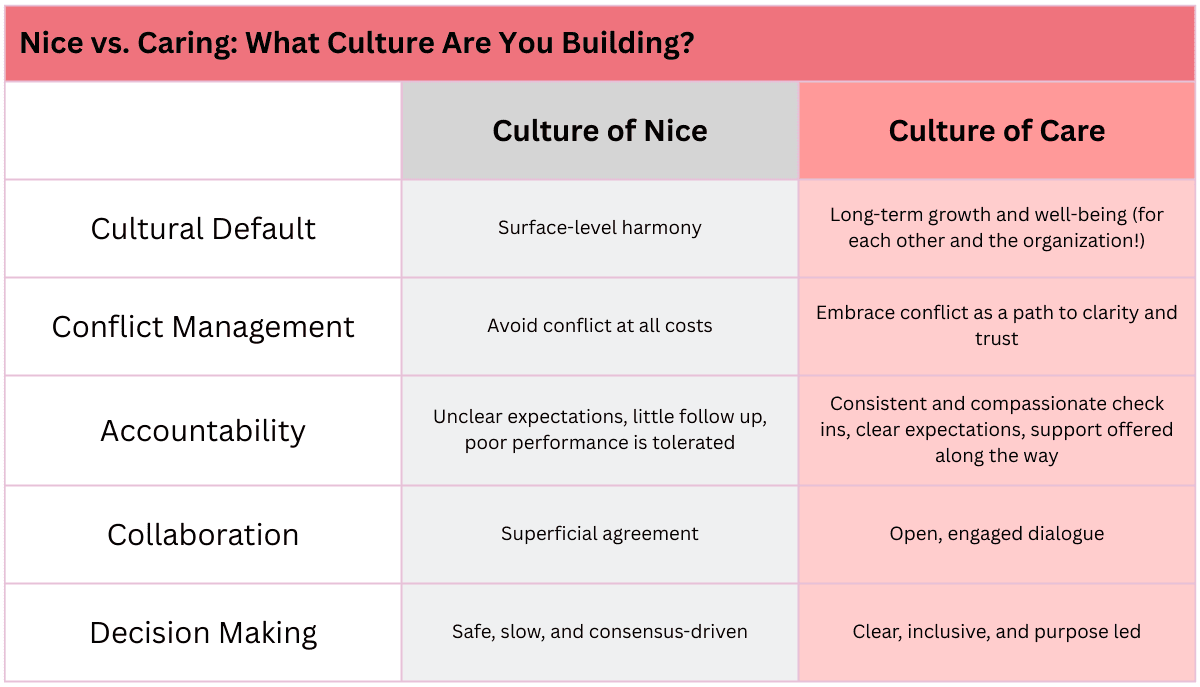
It’s easy to assume that a “nice” team culture is a healthy one. But as the chart below shows, nice doesn’t always mean effective. When harmony is prioritized over honesty, important conversations get skipped, performance issues linger, and decisions get stuck in a loop of consensus.
In contrast, a Culture of Care doesn’t avoid discomfort, it moves through it with purpose. Kindness, empathy, and respect absolutely matter but they aren’t the same as avoiding discomfort and disagreement.
A healthy culture supports both people and performance. High-performing teams don’t sidestep discomfort, they engage with it. They challenge ideas, speak with honesty, and give real feedback to strengthen relationships, clarify expectations, and move the work forward.
What It Takes to Build a Culture of Care
At BOxD, we help teams shift from performative harmony to productive honesty, building cultures where clarity, connection, and results go hand in hand. That kind of culture isn’t built on abstract values; it’s shaped by daily habits: how we give feedback, make decisions, navigate conflict, and follow through.
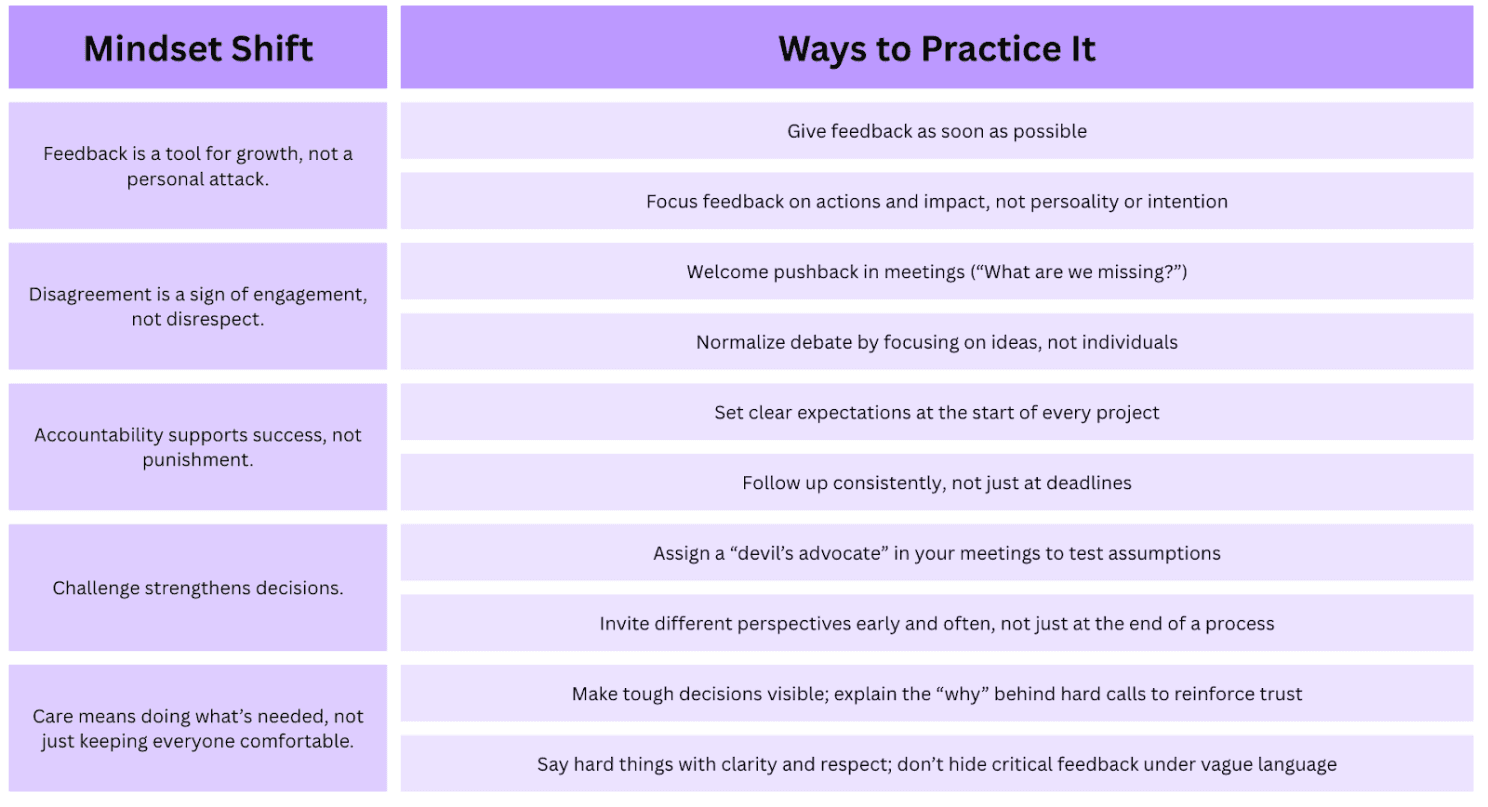
The visual above outlines just a few of the mindset shifts we help teams make and the practical ways to bring those shifts to life.